*Photo: NAHCON Chairman/CEO Ambassador Ismail Abba Yusuf*
The National Hajj Commission of Nigeria (NAHCON) has outlined an ambitious reform agenda aimed at modernising Nigeria’s Hajj operations and aligning them with Saudi Arabia’s Vision 2030, as it begins preparations for the 2027 pilgrimage season.
In his opening address at the Stakeholders’ Summit on Post-2026 Hajj Review and the NAHCON Reform Agenda, held at the NAF Conference Centre in Abuja on Wednesday, July 15, 2026, NAHCON Chairman/CEO Ambassador Ismail Abba Yusuf described the gathering as a platform for honest introspection and institutional improvement.
“We have gathered the entire Hajj family under one roof — regulators, State Boards, private tour operators, airlines, medical teams, our legislative partners and our esteemed Saudi friends — for the purpose of introspection,” Yusuf said.
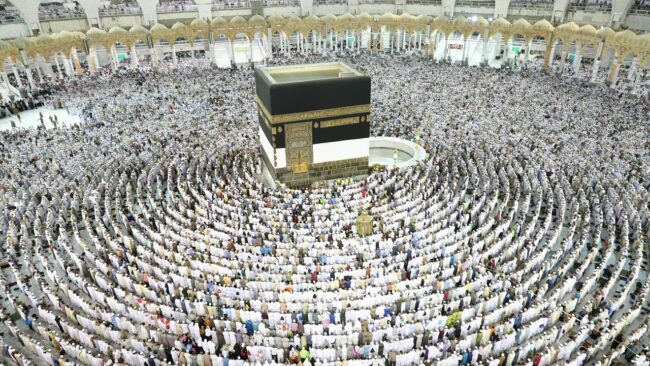
The summit reviewed the just-concluded 1447AH/2026 Hajj, acknowledging both achievements and shortcomings. Among the positives highlighted were an orderly airlift, improved visa processing through the Nusuk platform, enhanced medical services, and better coordination among stakeholders. Nigerian pilgrims performed their rites safely and returned home peacefully.
However, Yusuf did not shy away from challenges encountered during the exercise. He pointed to the circumvention of medical screening by 109 pilgrims, lapses in catering services in the Masha’er, gaps in service-provider compliance, and pressure points in accommodation and transportation.
“The season also exposed failures that this Summit must confront frontally,” he stated, adding that NAHCON has already initiated post-season reconciliation with service providers and will enforce accountability clauses in agreements. “The era in which contractual failure carried no consequence is over. Pilgrims must receive relief for every poor service rendered. Performance will henceforth determine patronage.”
The core focus of the summit, according to the NAHCON chief, is to reposition Nigeria’s Hajj management to match the Kingdom of Saudi Arabia’s ongoing transformation of pilgrimage services. With Saudi Arabia expanding capacity and fully digitising operations through platforms like Nusuk and Masar, Nigeria must adapt to secure better quotas, earlier contracting, and premium services.
Key elements of NAHCON’s reform agenda include:
*Early planning and enforcement of a predictable Hajj calendar
*Development of a single National Pilgrimage Digital Platform for registration, payments, and services
*Strict enforcement of service standards and professional accountability across all levels
*Strengthened financial transparency and cost governance
*Decentralised operations with strong central oversight, where State Pilgrims Welfare Boards and licensed operators handle services while NAHCON focuses on regulation
*Comprehensive oversight of Umrah operations
*Professionalisation through the Hajj Institute of Nigeria for training and certification
*Standardised pilgrims’ education in major Nigerian languages
Amb. Yusuf emphasised that Hajj is now one of the world’s largest recurring mass events and must adopt global best practices in crowd management, data-driven planning, and service-level agreements.
“The Nigerian pilgrim is not asking for luxury. He is asking for order. She is asking for dignity,” he said. “That is a reasonable request, and under this reform agenda, it is a promise we intend to keep.”
Outcomes from the plenary sessions are expected to shape NAHCON’s roadmap for the 1448AH/2027 Hajj and future engagements with the Saudi Ministry of Hajj and Umrah. Preparations have already been directed to commence immediately.